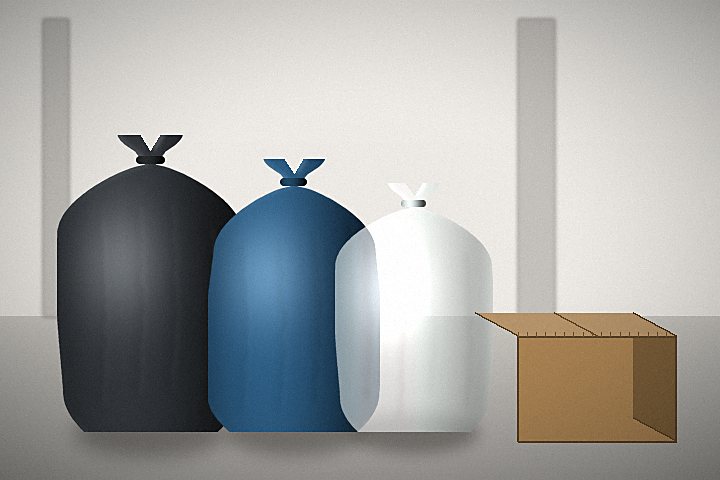
An FM contractor buys the same three categories a factory does, but against a service contract with a fixed consumables budget and sixty delivery points.
What you buy
| Product | Typical specification | Why |
|---|---|---|
| Medium duty refuse sacks | 30 µm LDPE, 600 × 900 mm | offices, washrooms, dry waste |
| Heavy duty refuse sacks | 50 µm LDPE, 700 × 1100 mm | kitchens, communal areas |
| Wheelie bin liners | 40–50 µm, 240 L and 1100 L | external bin stores |
| Clear recycling sacks | 30–40 µm | streams that must be visually checked |
| Compactor sacks | 80–100 µm, 860 × 1170 mm | sites with a compactor |
Specifications, pack quantities and minimum orders for each: bin liners, stretch film, cling film.
The decision that matters: gauge by site type
The most common overspend in FM is one gauge across the whole portfolio. A 50 µm sack in an office where the bin holds paper towels is 40% more polymer than the job needs, and multiplied by sixty sites it is a line on the P&L.
Split the specification:
- Offices, washrooms, meeting rooms — 25–30 µm is enough. Waste is light and dry, and nothing punctures.
- Kitchens and canteens — 50 µm minimum. Wet waste, bones, tins.
- Communal and external — 50–60 µm, and star sealed. These sacks get dragged.
- Compactor — 80–100 µm, sized to the machine, never to the bin.
Two specifications instead of one is not more administration; it is one extra line on the order and it usually pays for the whole switch.
Colour coding across a mixed portfolio
Where a client mandates colours, the constraint is minimum run size: 500 kg per colour. For a contractor running blue, green, clear and black across a portfolio, that is workable. For a single site, it is not — and in that case printed labels on clear sacks are cheaper than four coloured runs.
Delivery to many sites
The plant ships to one address. Consolidation across sixty delivery points is a distribution problem, and the honest answer is that your own hub or a national distributor does it better than a Polish plant can.
Where this works well: you hold a central store, full pallets arrive there on a call-off programme, and prices are fixed quarterly rather than for 14 days. Where it works badly: direct delivery of two cases to each site — the freight destroys the saving, and we will tell you so before you order.
Common mistakes
- Specifying by litres. A “240 litre sack” from two suppliers can differ by 80 mm in width. Specify useful width and length in millimetres, per EN 13592. The bin liner size finder converts bin volume to dimensions.
- Buying gauge to stop double-bagging without checking why. If cleaners double-bag, the sack is usually the wrong size rather than too thin.
- Ignoring the case count. Two suppliers at the same price per case can differ by 50 sacks per case. Compare price per sack.